academisch project – Roy Ruigt – Maastricht Academie of Architecture – Master of Interior Architecture
NOMINATED FOR THE BNI 2017 & EAP 27
In 2017 I’ve had the opportunity of staying two weeks at Frank Lloyd Wright’s Taliesin West desert studio in Arizona. “Nowadays it is known as the Frank Lloyd Wright School of Architecture where students graduate with practical knowledge of building their own shelters on the complex. This so-called ‘student shelter program’ was introduced by Frank Lloyd Wright. The shelter program is a unique experiential learning opportunity for students to design, build, and live in a structure they have created while enrolled at the Frank Lloyd Wright School of Architecture.” ( Taliesin West – Frank Lloyd Wright School of Architecture )
This knowledge sparked my curiosity and I contacted the dean A. Betsky and the residence life manager J. Silverman. They responded kindly, with a very elaborate and informative mail. They introduced me to the ‘wild life shelter experience’.

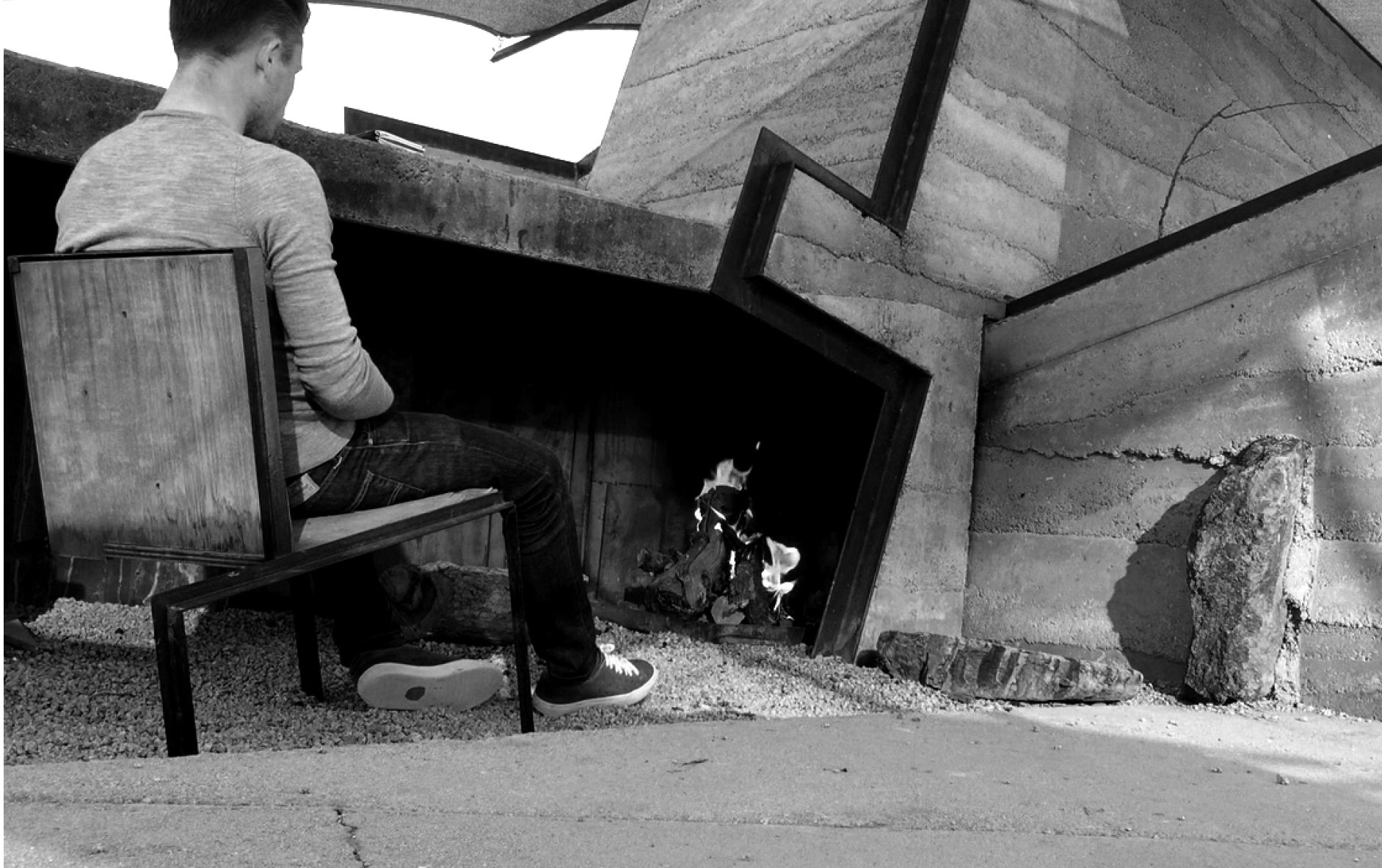
During my stay I had the opportunity to sleep in the Brittlebush shelter. Sleeping there, exposed to natural elements, made me experience the rough landscape and its architecture. Taliesin West rests in the Sonoran desert setting as if it has been there for a thousand years. The materiality, language and geometry are projecting a sense of a mythical ruin. Large boulders and desert rocks combined with concrete form a landscape of walls, covered with a Cherokee red wooden construction. Between the wooden construction, canvas sheets blend the sunlight in a very particular way into the interior. Huge fireplaces made out of the same desert rocks, rise out of the ground. They are used to provide heat for the rooms, which originally did not even have glass to close the openings. But more importantly, the huge rough fireplaces project an extraordinary sense of warmth and welcoming.
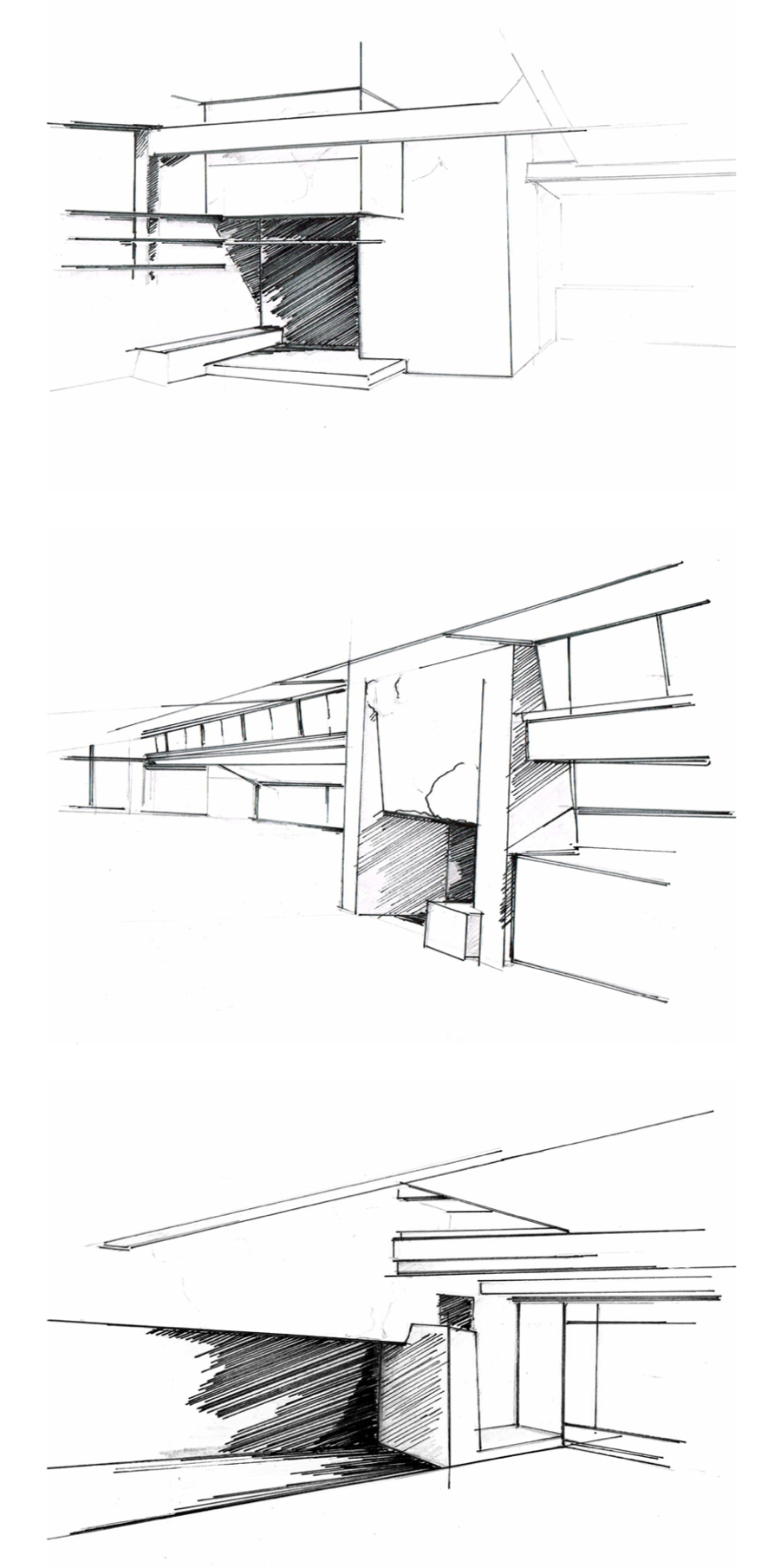
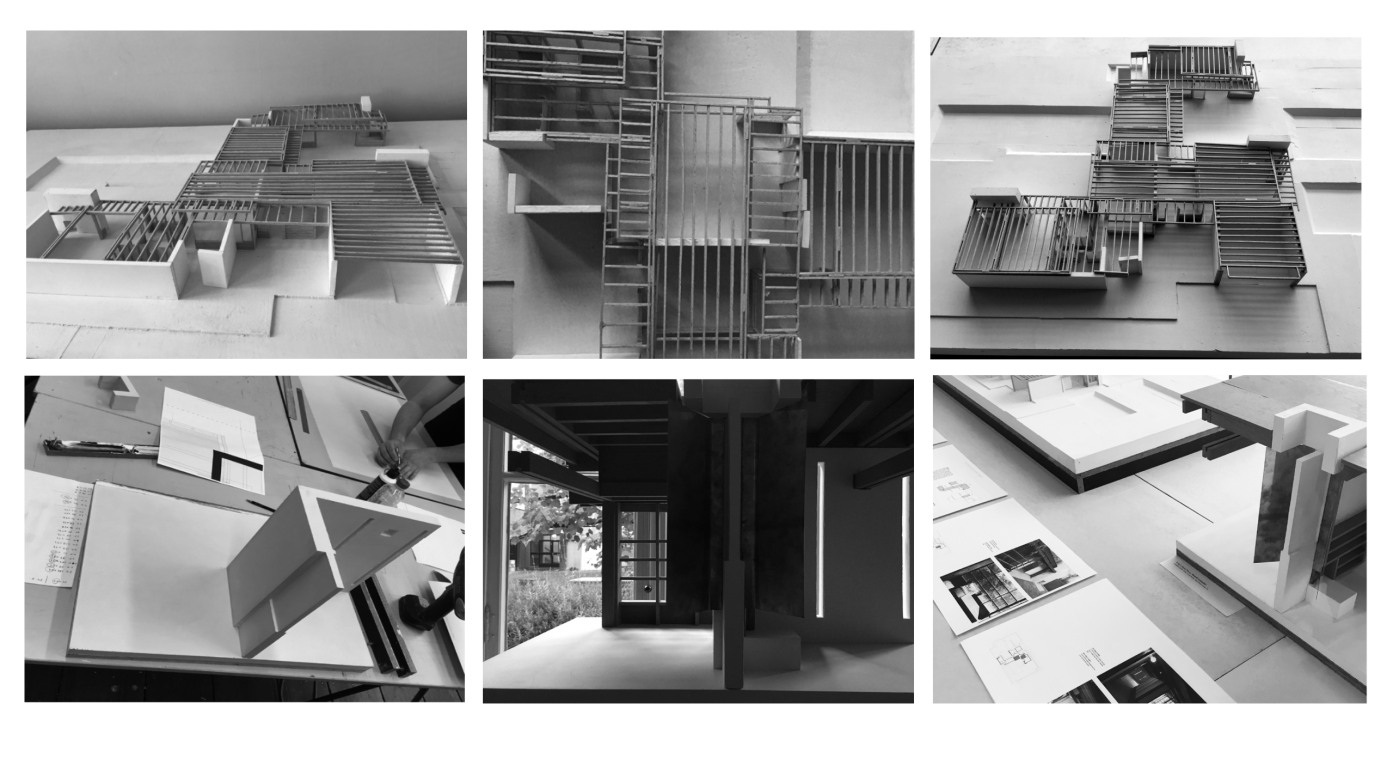
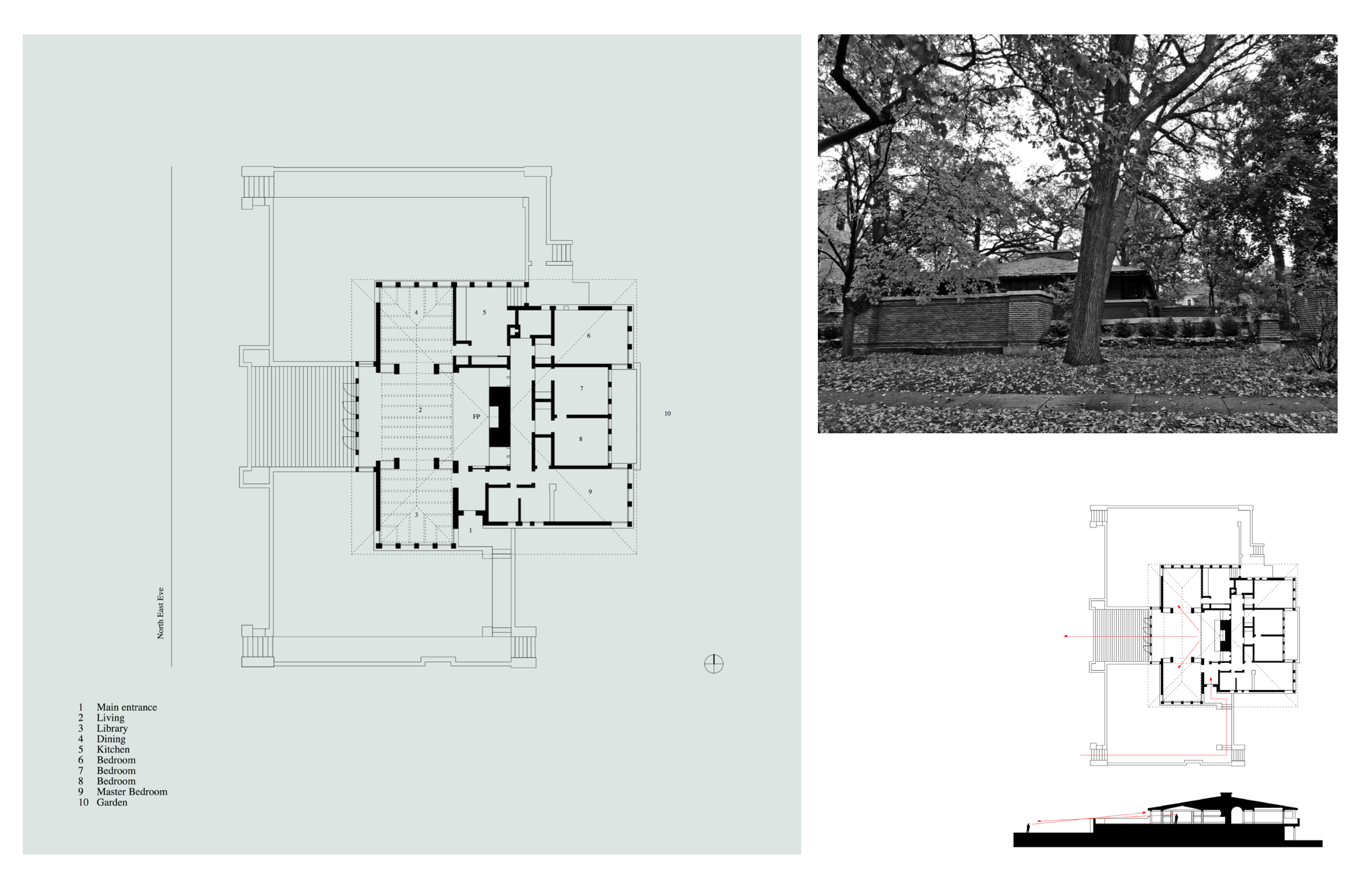
This unique experience led me to study the meaning of the fireplace and the role of the element fire in architecture. By making models and drawings, I’ve investigated Frank Lloyd Wright’s Taliesin West, Edwin Cheney house, and Rudolf Schindler’s King’s Road house. The process of creating these models and writing my thesis helped me to gather enough information to design a study model. The aim was not to copy the architectural language of Wright and Schindler, but to discover my own vision on the role of the fireplace in architecture.

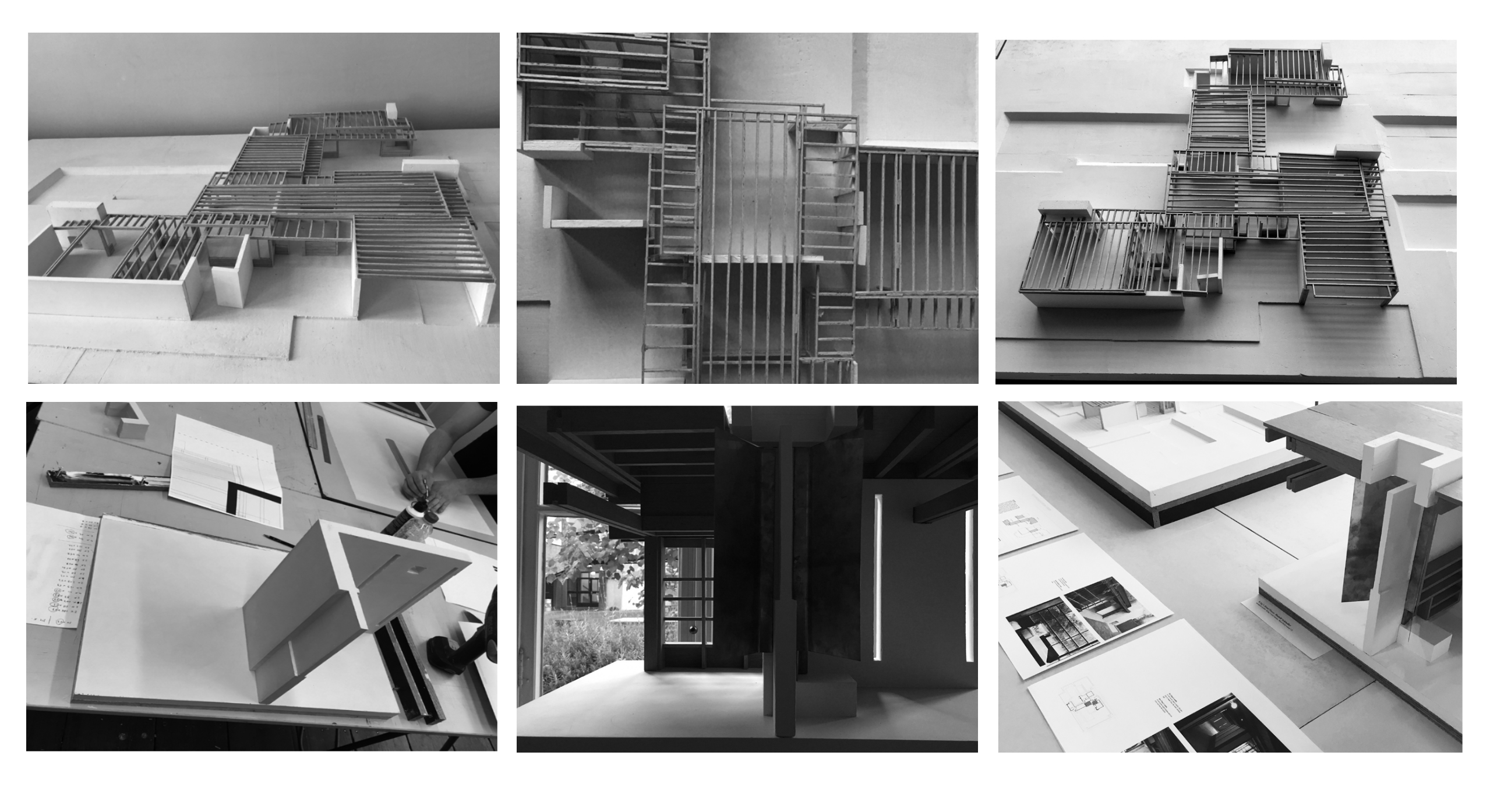
During this process I’ve struggled a lot to conceptualize a concrete idea. I started with the idea of an academical site where students could experience a different context then they were used to.

However, I realized that this study model was far to complex, and it did not capture the essence of what I hoped to achieve. By realizing this I’ve started over, with a blank paper. I had figured out I took a step too far, and overlooked some important steps. I decided to go back to the basics and to research the location once more. I went through the setting layer by layer, by building landscape models, drawings, photography and writing texts. This process helped me get a better understanding.

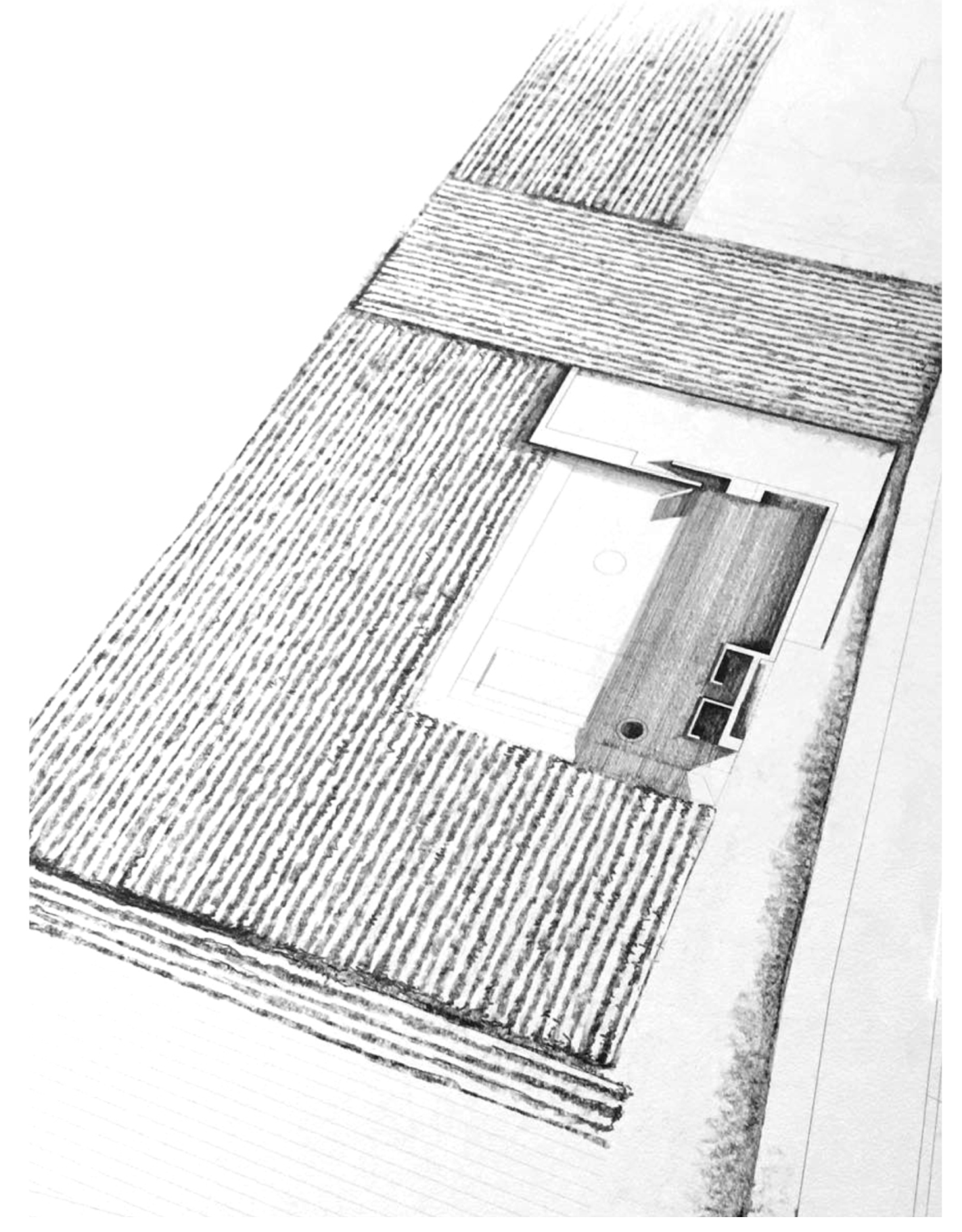
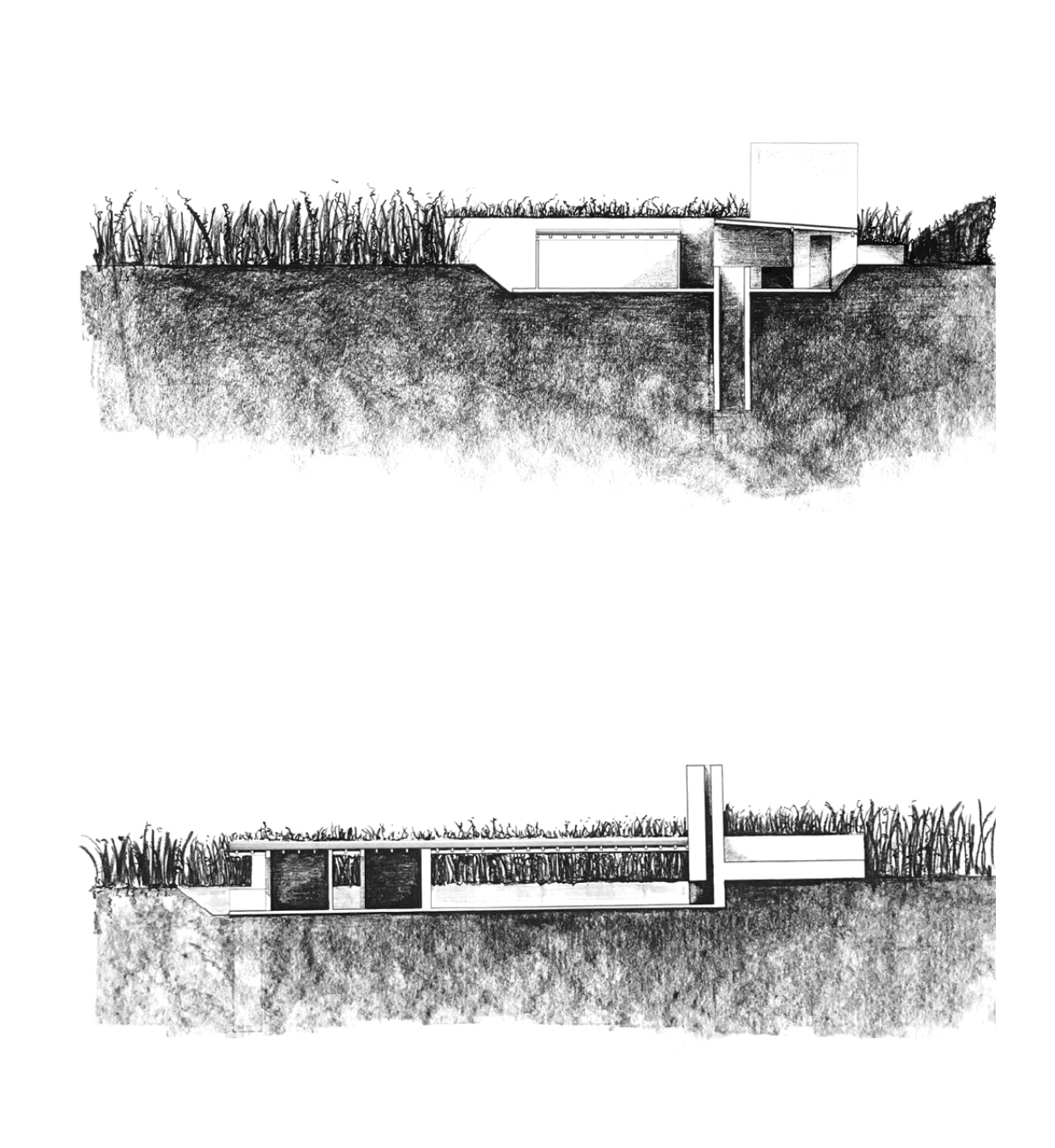
The new study model includes a program for students who will explore and experience a given context in Maastricht by doing fieldwork. Students explore the area from their direct physical observation and experience. They examine a setting located in a river valley area along the Meuse. The area consists of a very diverse and complex patchwork of architectural elements and typology. It is also located in a constant agricultural cycle, which will influence the physical perception and experience of the student.

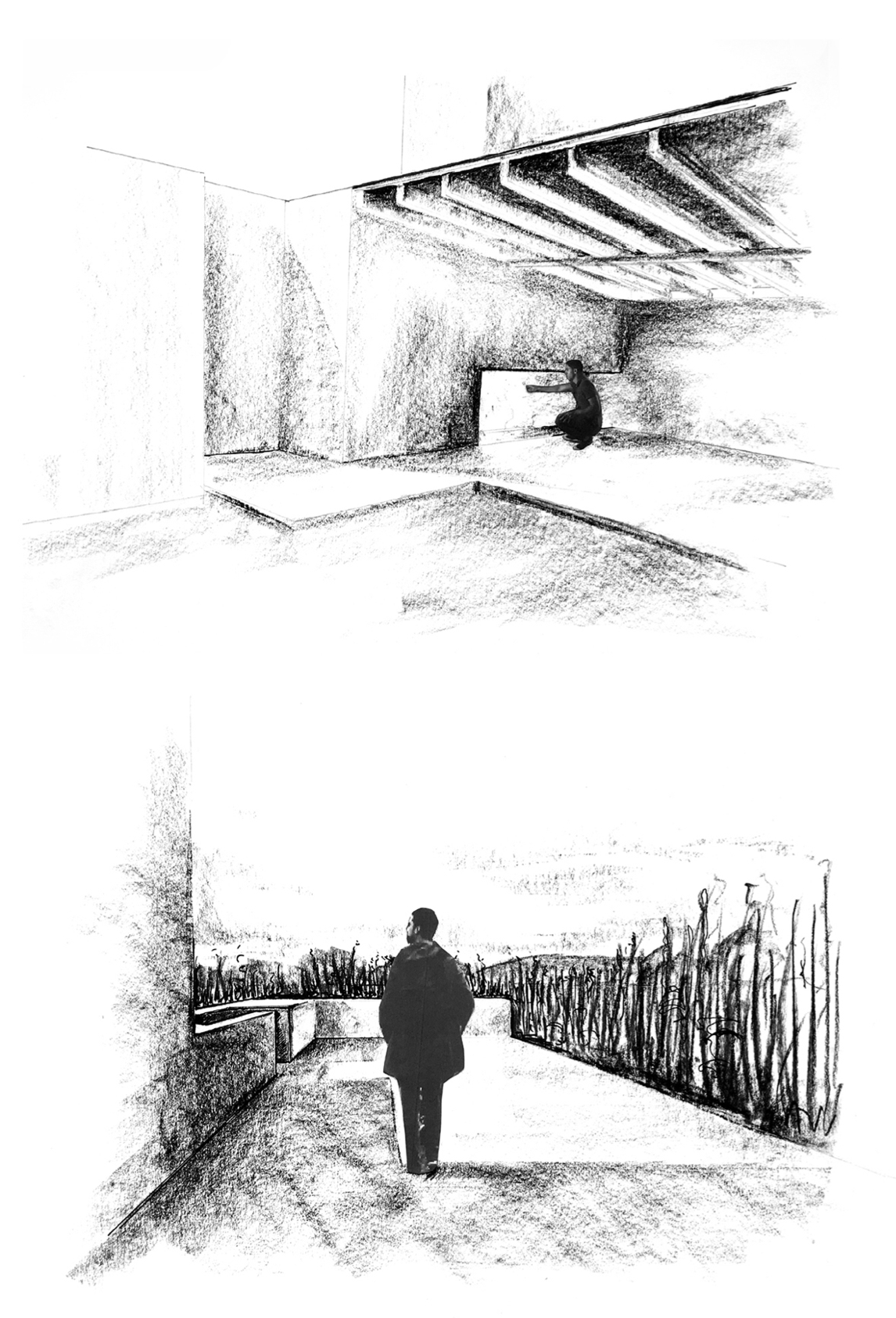
In order to achieve this, the student will need a base that facilitates a number of stay qualities. This base consists out of a study on the most fundamental architectural elements. The fire which stands for the beginning, heating, and illuminating the space, the chimney which gives orientation in the field, and it declares the potential for fire and refuge. The platform which forms the base, and the roof that provides shelter. Traditionally, architecture creates a strong division between inside and outside, keeping the cold outside while preserving heat within. This base will push the boundaries of the possibilities in the Dutch climate. These stringent conditions promote awareness of the environment and force the student to find resources and to create comfort for themselves. Ultimately, the student will experiment in the field through architectural means.